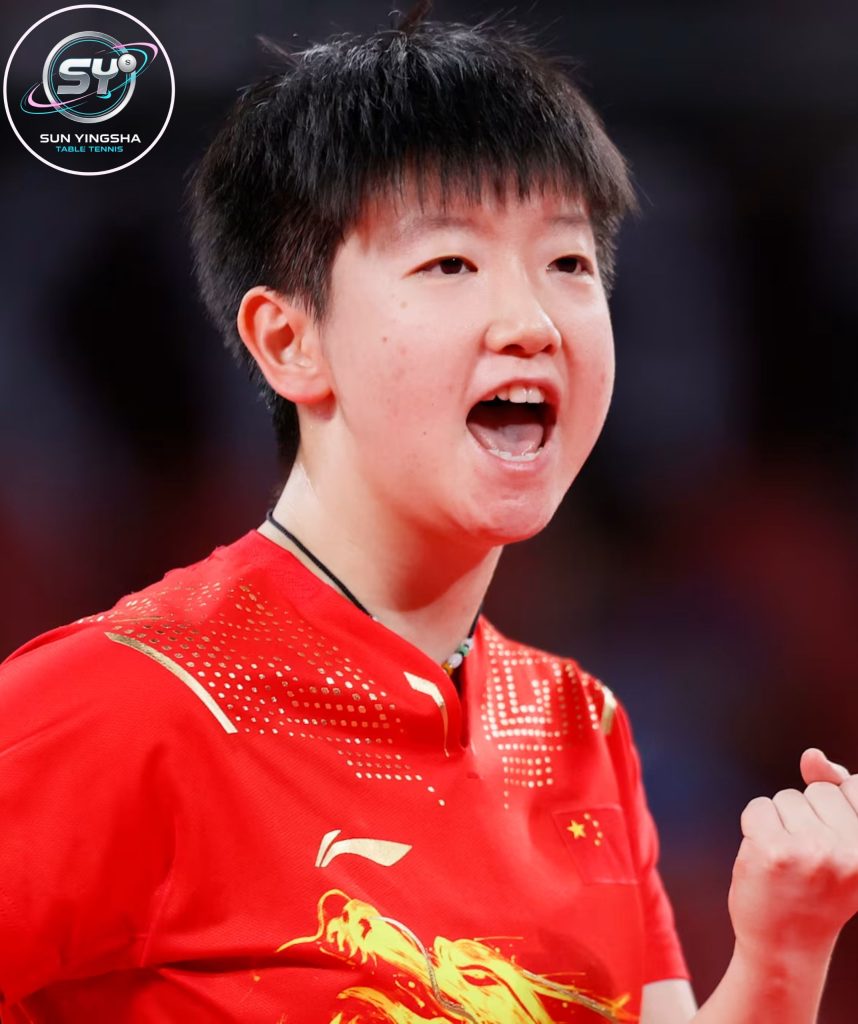
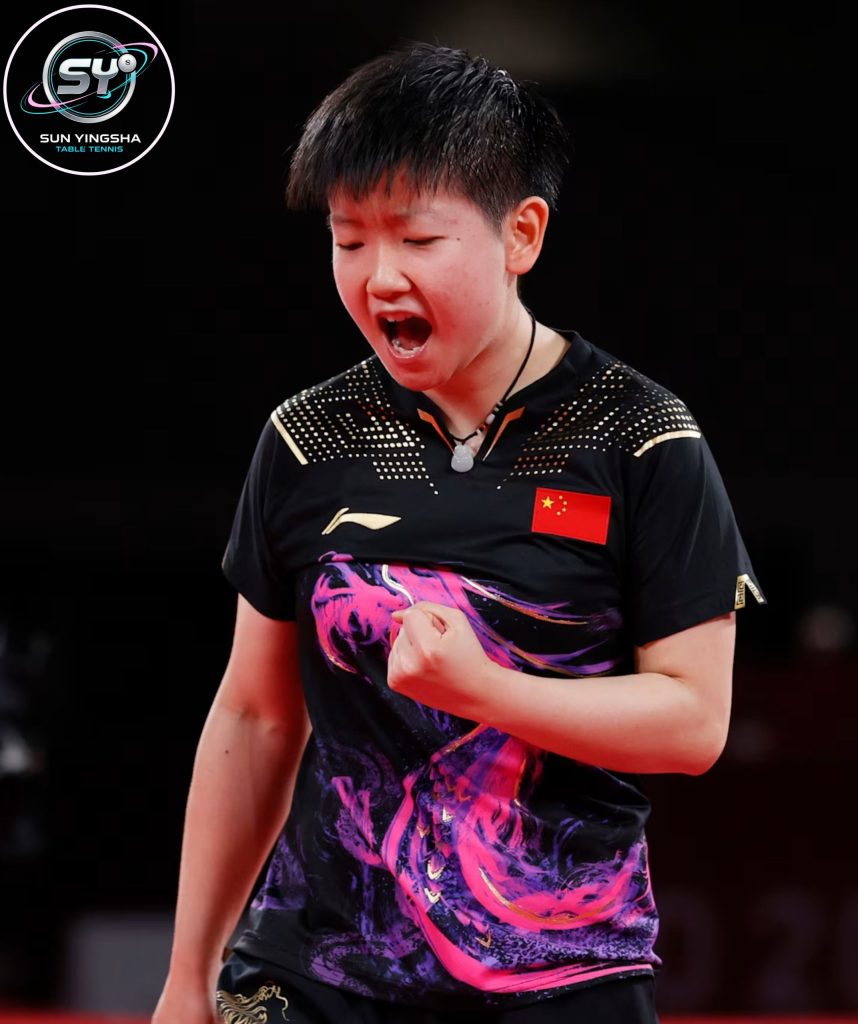
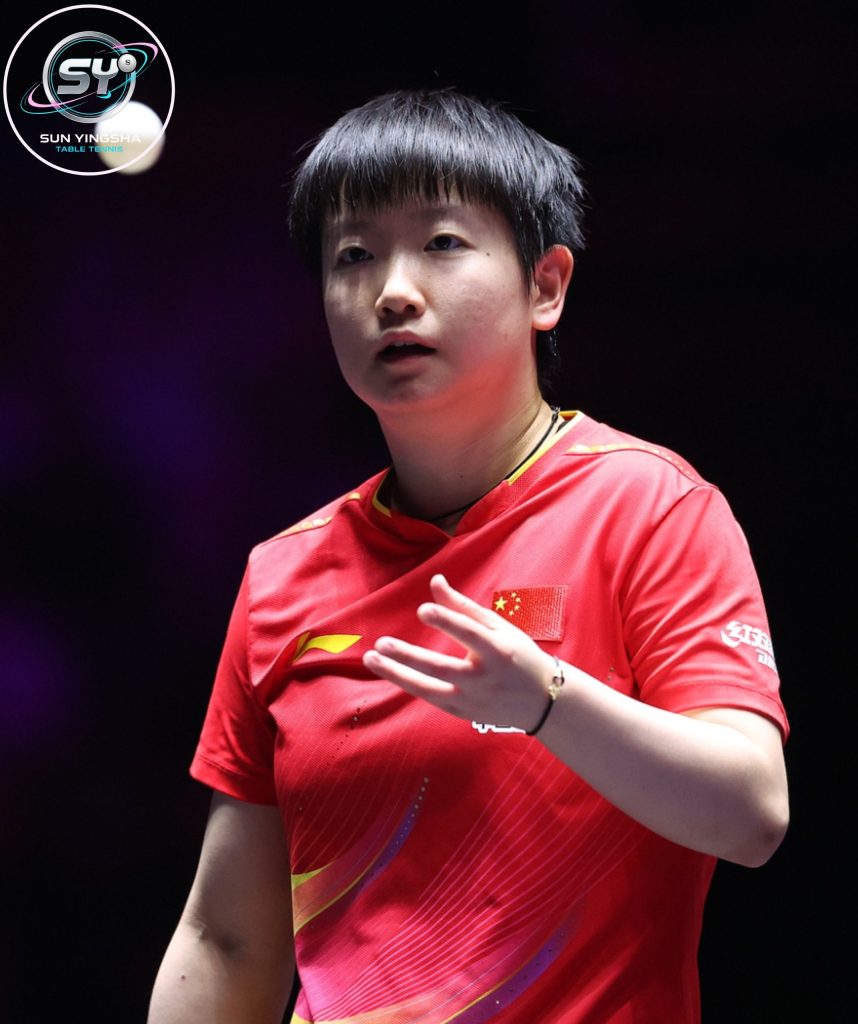
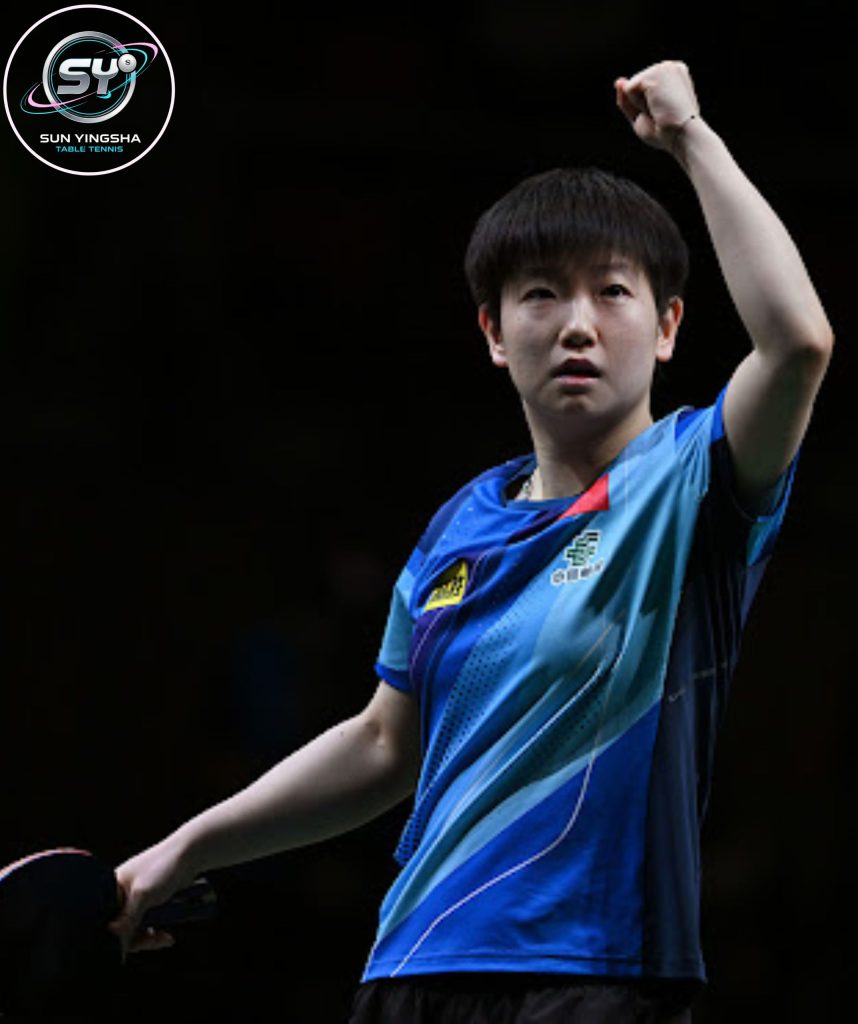
About Sun Yingsha

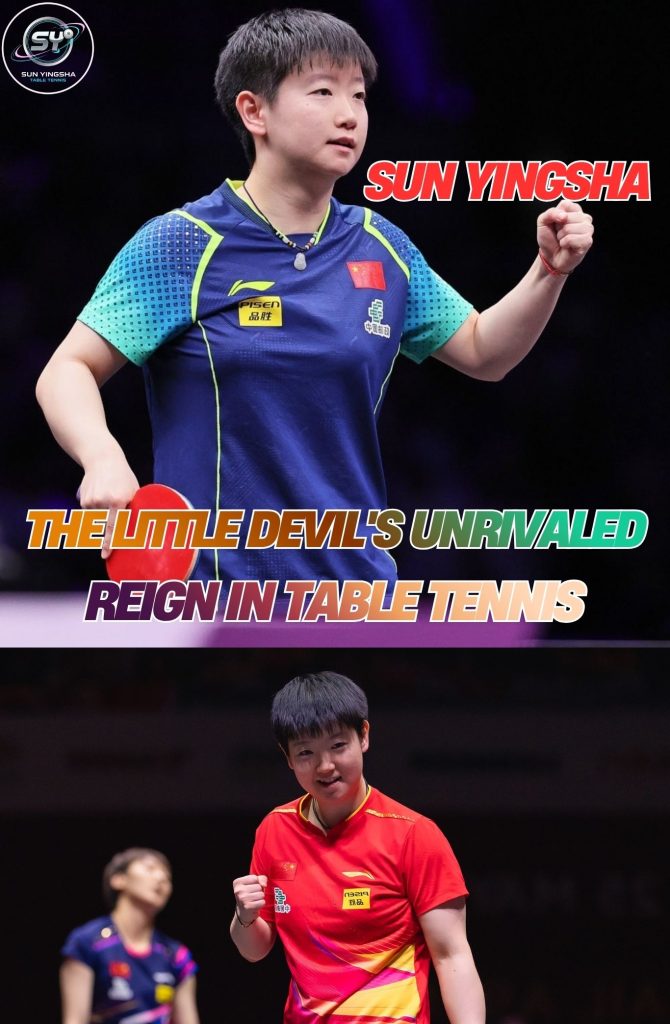
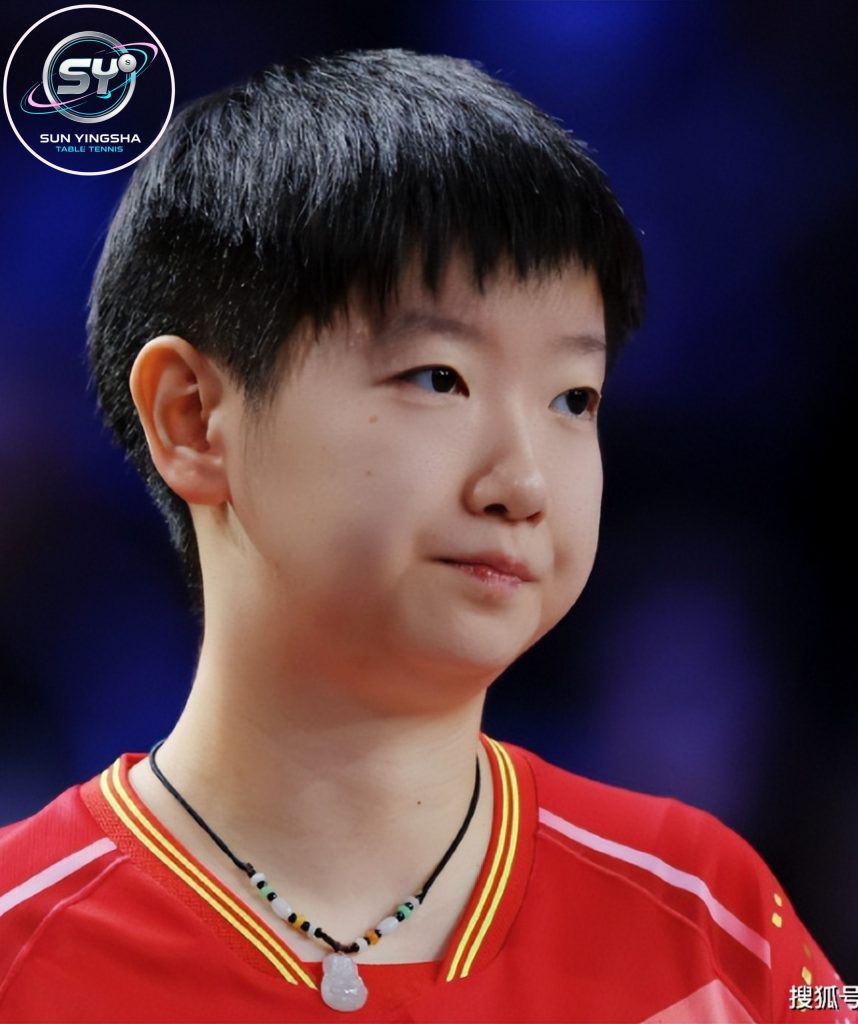
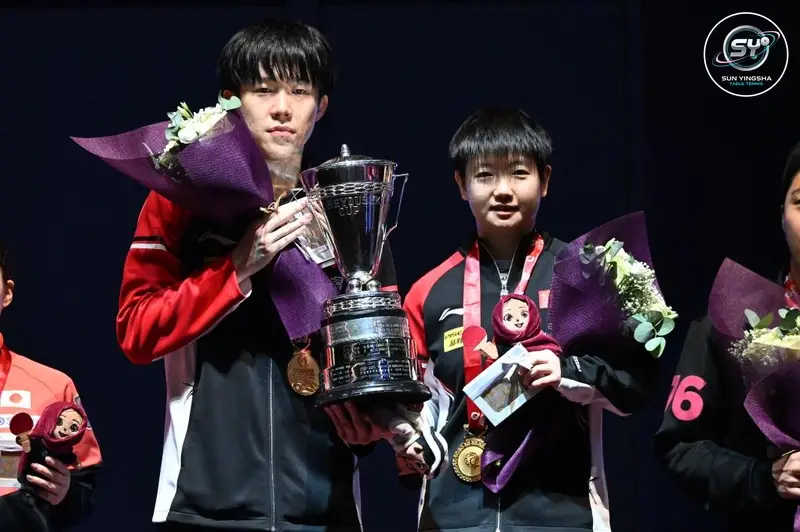
From “Old Sun” to the “Little Devil,” Sun Yingsha built an era: multiple spells as world No.1, Olympic golds, and the 2025 world singles crown. Explore a clean, sourced profile-early life, national team breakthrough, style and rivalries, earnings and endorsements-curated for quick reference.

Quick Facts

Field

Detail

Full name

Sun Yingsha (孙颖莎)

Born

4 November 2000, Shijiazhuang, Hebei, China

Height / playing hand

1.62 m / right-handed, shakehand grip

Known for

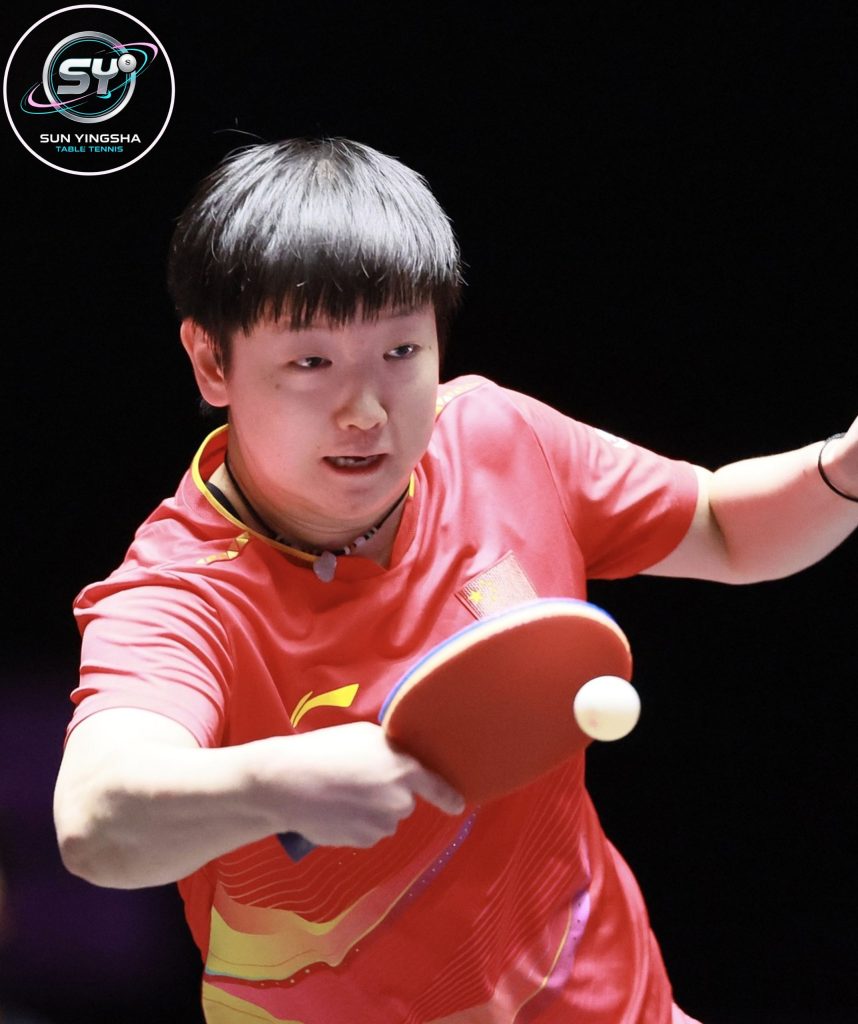
Early timing, elite backhand counters, serve/receive mastery

Main events

Singles, women’s team, mixed doubles

Notable partners

Wang Chuqin (mixed), Wang Manyu (doubles)

Nicknames

“Little Sun”, “Little Devil” (competitive persona)

Current status

Multiple stretches as world No.1 in women’s singles

Home pillars

Profile & career, Stats & highlights, Contract & market, Lifestyle & personal, Fan zone, Top list

Milestone Snapshot

Year

Event

Result

Notes

2017

Japan Open (senior breakthrough)

Champion

Teen breakout vs elite field (context from career profiles). 

2020

Tokyo Olympics

Women’s Team: Gold

Olympic debut, team title. 

2024

Paris Olympics

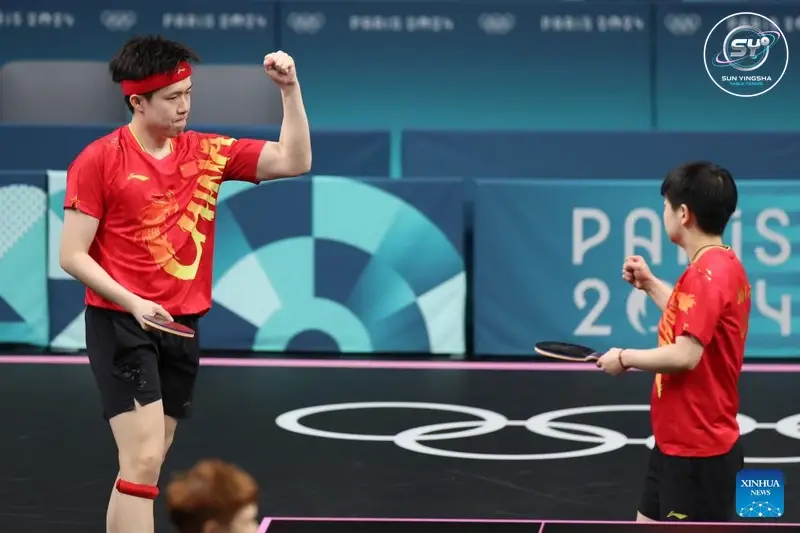
Mixed Doubles: Gold

With Wang Chuqin. 

2024

Paris Olympics

Women’s Singles: Silver

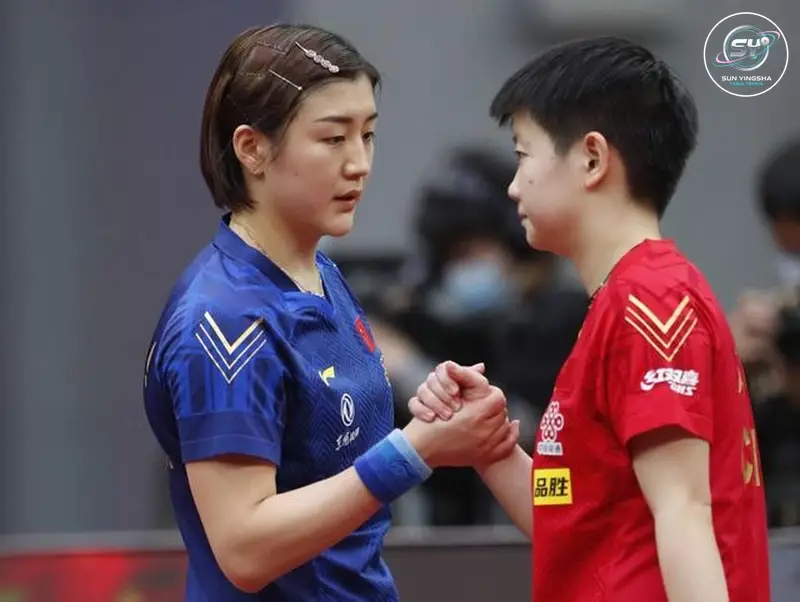
Final vs Chen Meng.

2024

Paris Olympics

Women’s Team: Gold

Continued team dominance. 

2025

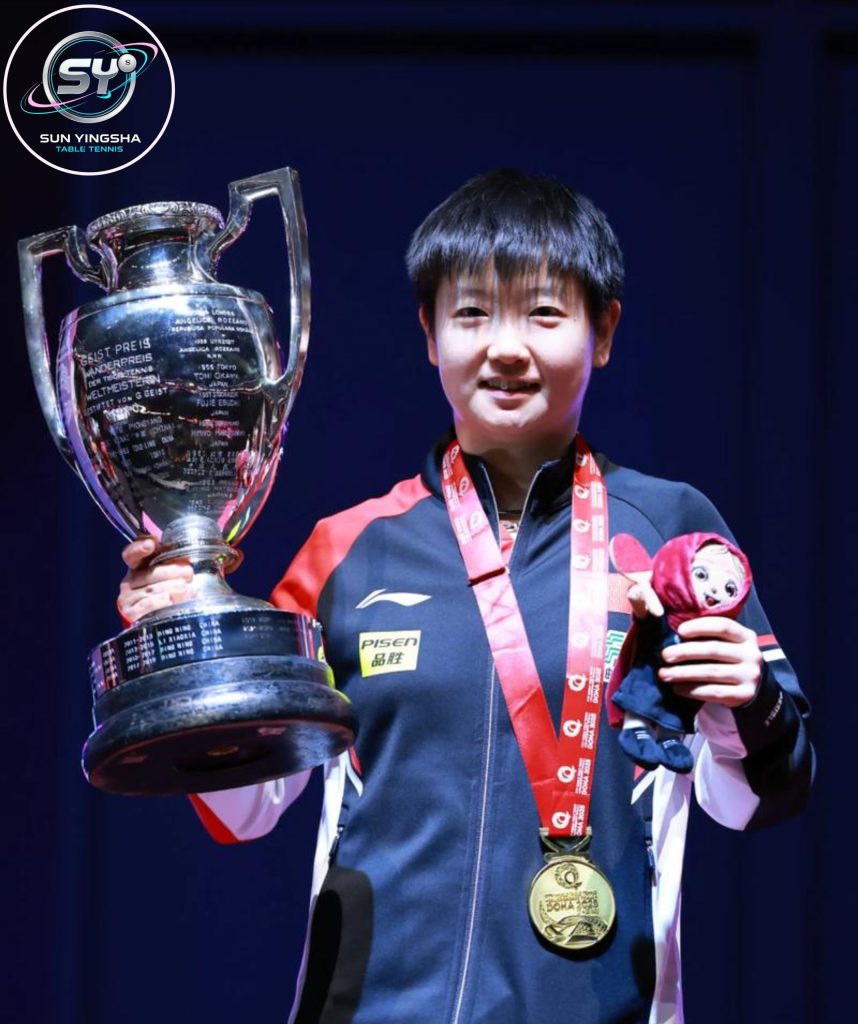
World Championships (Doha)

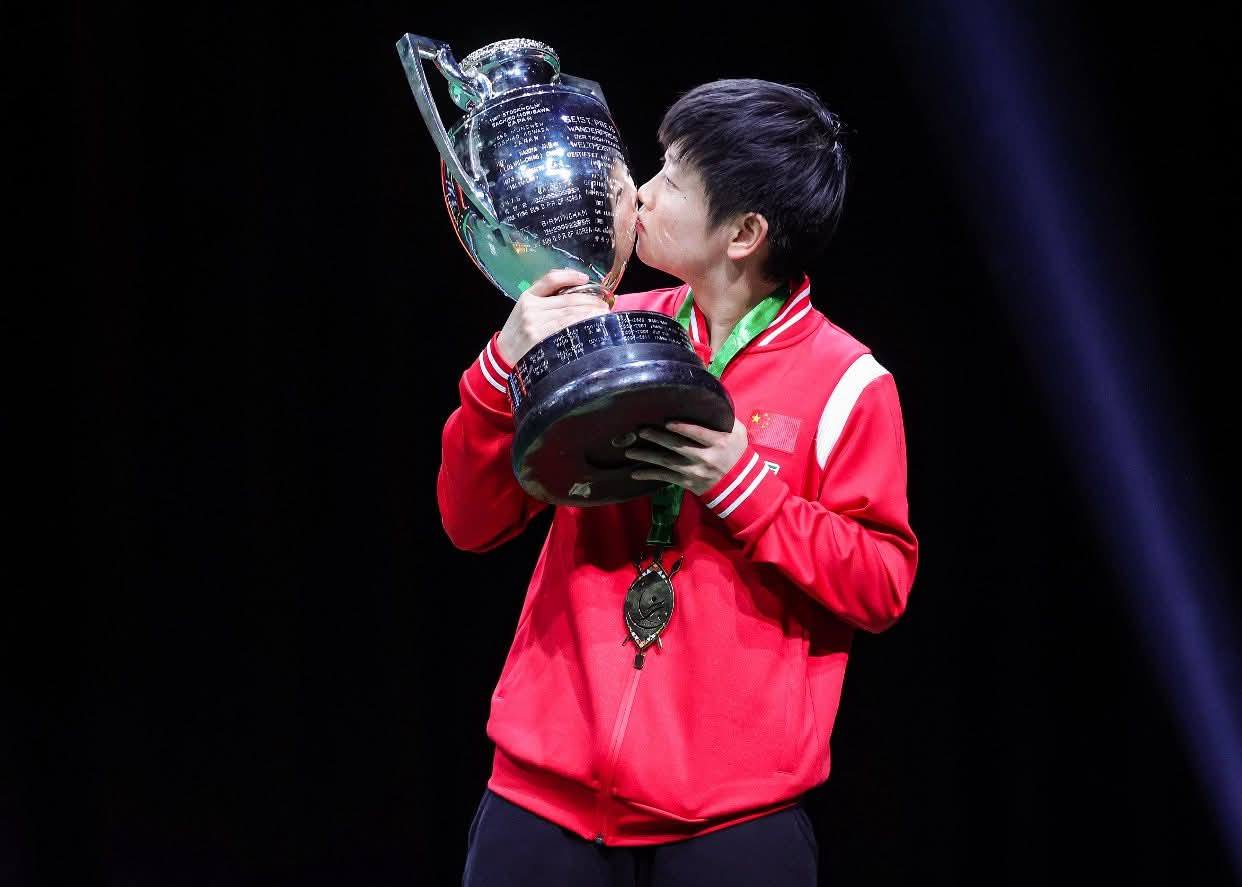
Women’s Singles: Gold

4–3 in final. 

2025

Ranking

World No.1

Verified on WTT rankings & ITTF profile. 

Early Life

Sun Yingsha’s journey to table tennis superstardom began far from the bright lights of global arenas. In Shijiazhuang – Hebei’s industrial heartland – the rhythm of daily life was modest, yet it became the perfect cradle for a young girl’s curiosity and determination. Long before medals and world titles, there was simply a paddle, a wall, and a dream waiting to take shape.

A Modest Upbringing in an Ordinary Family

Born into what she affectionately calls “a completely ordinary civil servant family,” Sun grew up in a home defined by discipline, warmth, and quiet perseverance. Her parents, both public servants, valued hard work and education over extravagance. Meals were humble, evenings filled with laughter and television, and weekends meant playful family moments that balanced structure with affection.

Her father has remained a private figure, but her mother often emerges in Sun’s retellings as the silent architect of her destiny. Concerned about her daughter’s fragile build and restless energy, she enrolled five-year-old Yingsha in a local table tennis class – not to chase glory, but simply to help her exercise. In hindsight, that small parental decision changed the course of Chinese table tennis history.

Sun’s earliest memories of practice were not of professional training centers but of bouncing balls against her apartment walls until bedtime. Those faint scuff marks, she once joked, were “the first signs of my career.” Though her parents were not athletes, their unwavering support built her resilience. They encouraged her to pursue passion without pressure, a foundation that later grounded her amidst fame and competition.

Even today, Sun credits every victory to her family. Each medal, she insists, “belongs to all of us,” a reminder that even world champions rise from the gentlest beginnings.

Discovering the Paddle: A Spark Ignites at Age Five

The defining spark arrived in 2005. At just five years old, Sun held a paddle for the first time at her school’s extracurricular club – an innocent beginning that quickly turned into obsession. What started as after-school fun soon became her universe. The first satisfying ping of rubber meeting ball fascinated her. “I fell in love instantly,” she recalled in Our China Story, describing how spin and speed felt like puzzles she was born to solve.

Unlike many children who trained out of obligation, Sun was insatiably curious. She stayed long after class ended, copying techniques she had seen on television. Coaches noticed her almost immediately. She learned by watching – one glance at an older player’s loop drive, and she could mimic it with uncanny precision.

By seven, she was already outplaying older boys, earning the playful nickname “Old Sun,” a nod to her composure under pressure. Home turned into a training ground; her bedroom wall became her practice partner. Instead of bedtime stories, she replayed shadow swings and studied icons like Deng Yaping, her first idol.

This fierce curiosity molded her into more than a prodigy – it built the discipline that defines her career. For Sun, table tennis stopped being a pastime; it became purpose.

From Local Wonder to Provincial Prospect

As local tournaments piled up, so did attention. By nine, provincial scouts began to take notice. Her mother kept her grounded, balancing schoolwork and friendships alongside training. While little is known about siblings or extended family, those close to Sun describe a household that valued balance as much as ambition.

The path forward wasn’t smooth. Minor injuries and early defeats taught her humility, but every challenge toughened her mentally. She learned the art of recovery – a lesson that would prove vital in her later duels on the world stage.

Provincial Glory and the Call to the National Team

At just ten, Sun Yingsha joined the Hebei provincial team – the first real proving ground for China’s next generation. Training there was no child’s play: six-hour sessions, relentless drills, and strict technical refinement under the nation’s sharpest coaches.

Her footwork grew explosive, her spins unpredictable. The once-playful girl from Shijiazhuang began turning heads nationwide. By fifteen, she stunned the competition at the 2015 National Youth Championships, clinching the women’s singles title – a triumph that opened the gates to the national setup.

Joining the B-team later that year, Sun entered a pressure cooker of elite sparring, surrounded by names she once idolized: Liu Shiwen, Ding Ning, Zhu Yuling. For sixteen months, she trained, studied, and absorbed everything – the pace, the mindset, the ethos of “win or learn.”

In January 2017, at just sixteen, she was promoted to the senior national team – a meteoric rise few achieve so young. Those early seasons forged her competitive soul: learning to handle losses, cherishing small wins, and embracing the idea that progress comes one rally at a time.

From Shijiazhuang’s sun-baked community courts to Beijing’s hallowed halls, Sun Yingsha’s story had transformed. The girl who once hit balls against her apartment wall was now the face of a nation’s future – and the world had begun to take notice.
Origins

Every athlete’s rise has a phase when raw promise meets real pressure – for Sun Yingsha, that crucible began once she secured her place on the national radar. From long training days in Hebei’s youth academies to the lights of the ITTF World Tour, this chapter captures the transformation of a gifted junior into one of the most formidable forces in modern table tennis.

Provincial Foundations and the Hebei Crucible

The Hebei years were less about glamour and more about grind. Still a child, Sun left home at ten, swapping her family apartment in Shijiazhuang for a dorm room at the provincial training base – a decision that would shape every facet of her discipline.

Life inside the Hebei system

  • Structure & sacrifice: Early wake-up calls, six-hour rally sessions, and the hum of table-tennis balls that never seemed to stop.
  • Technical focus: Multi-ball drills, video breakdowns, and precision serve–receive routines – cornerstones of China’s table tennis schools.
  • Evolution of her style: The right-handed shakehand grip grew sharper here, mixing power loops, quick counters, and deceptive blocks.
  • Nickname born: By thirteen, she was nicknamed “Old Sun” for her composed pre-serve ritual – a deep breath, a still gaze, and total focus before the strike.

Yet, progress came with pressure. Isolation from family and losses to older teammates tested her resolve. Rather than dwell, Sun turned mistakes into data – jotting errors in notebooks and correcting them in extra solo sessions. Her endurance, built through Hebei’s punishing post-practice runs, became a hidden weapon in her future five-game marathons.

By 2015, after logging over 5,000 training hours, Sun clinched the National Youth Championships title – proof that her persistence had turned from repetition into rhythm.

National Youth Ascendancy: Idols and Invincibility

Graduation from Hebei’s circuit to the national youth team in 2015 marked a new beginning. Here, Sun’s sharp instincts met sharper expectations, surrounded by peers chasing the same dream.

At the Shenyang national base, she trained under stricter regimens and found inspiration in her hero Zhang Yining, China’s legendary “Big Devil.” The posters on her dorm wall weren’t just decoration – they were motivation.

Breakthroughs that defined her junior era:


Year

Event

Achievement

Significance

2015

National Youth Championships

Gold – Singles

Confirmed her place on the national B team

2017

World Junior Championships, Italy

3 Golds – Singles, Doubles, Team

Announced her international dominance

2017

Asian Junior Championships

Gold – Mixed Doubles

Began her partnership chemistry with rising stars

2018

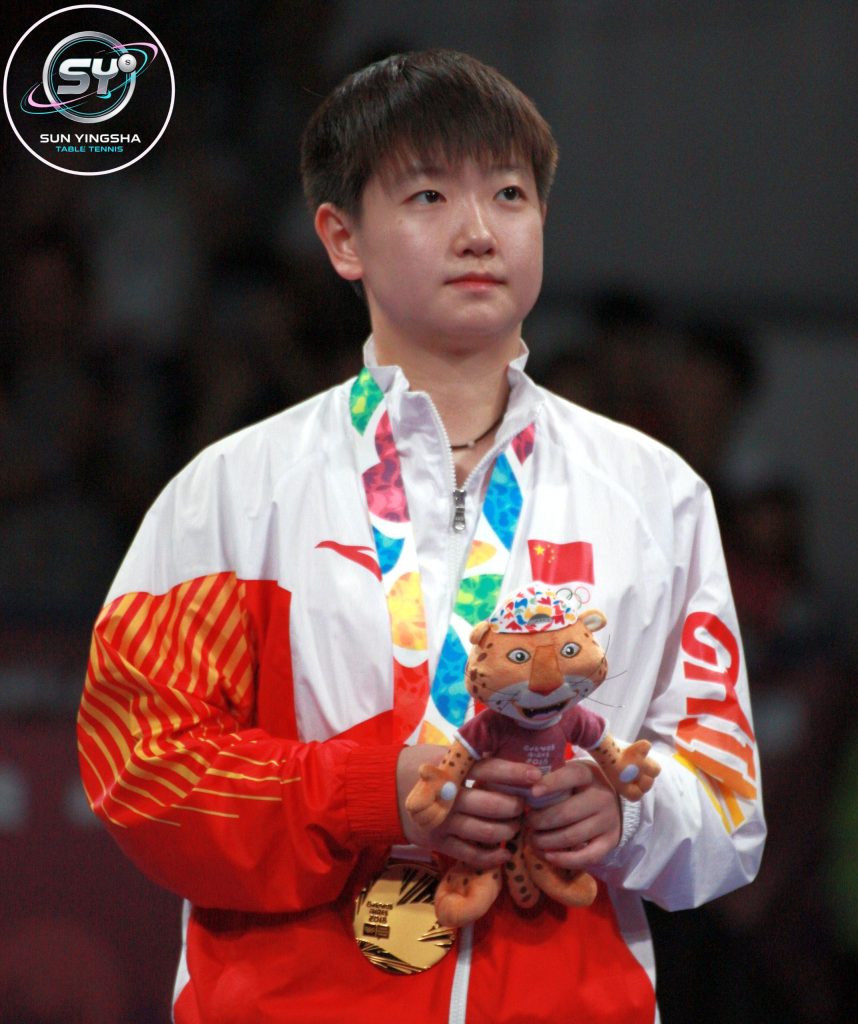
Youth Olympic Games

2 Golds – Singles & Mixed Team (with Wang Chuqin)

Cemented her as China’s next star

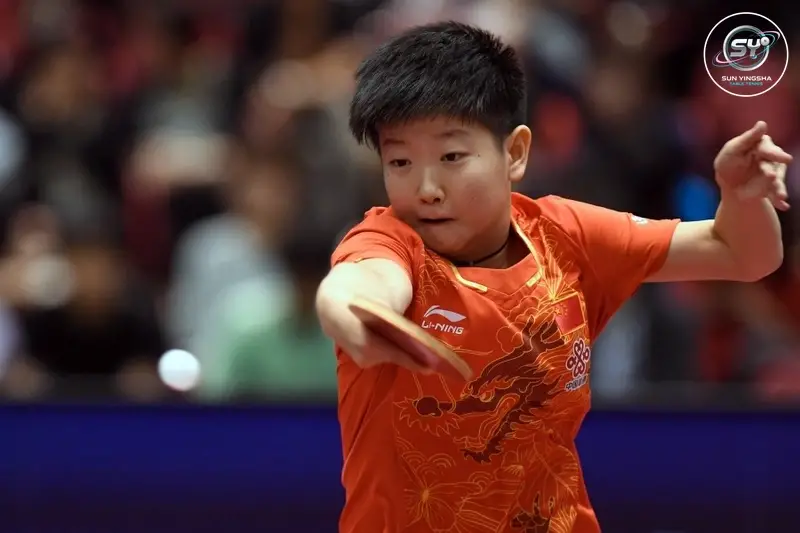
Through these years, her playing identity crystallized: an aggressive forehand topping 80 km/h, an instinctive backhand flick, and the ability to adapt tactics mid-rally. Coaches admired her “one-look learning” – the knack to observe a new move and execute it within minutes.

Off the table, she built friendships and rivalries that would fuel her next stage – especially with Wang Manyu, whose respectful competitiveness pushed both players forward. Even defeats, like a 2017 junior final against a Japanese rival, became study material. Sun’s post-match reflections and multilingual opponent research illustrated her maturity long before adulthood.

By 18, she had gone from idolizing legends to becoming the benchmark that future juniors would chase.

Shattering the Senior Barrier: The 2017 Breakthrough

Transitioning from youth to senior competition is often a brutal leap, but Sun Yingsha turned it into a statement. In 2017, at just sixteen, she entered the ITTF World Tour Platinum Japan Open and stunned the world – defeating reigning champion Chen Meng 4–1 in the final. It was a seismic upset, earning her the nickname “Little Devil” in homage to her idol’s “Big Devil” title. Her serves, unpredictable and fast-spinning, dismantled even veteran opponents.

That victory wasn’t an accident. It was the outcome of a meticulously crafted training program blending modern science with traditional rigor. National coaches, including Li Sun, fast-tracked her into the senior A-team rotation, where she sparred daily with Liu Shiwen and Ding Ning. Each rally became a lesson in timing, pressure, and resilience.

Her schedule was punishing: eight-hour days combining physical drills, tactical simulations, and mental conditioning. Plyometric exercises built her explosiveness; yoga improved flexibility; visualization exercises prepared her for clutch moments. She embraced it all. “Every drop of sweat has a destination,” she once said, hinting at her unwavering mindset.

The results came swiftly. By 2018, Sun had collected Asian Games golds in both mixed doubles and team events, and entered the world’s top ten. Though a quarterfinal exit at the 2018 World Cup briefly halted her momentum, it became a turning point. She learned to adjust her play – shifting from relentless aggression to controlled patience – an evolution that would later define her senior dominance.

By the time she turned eighteen, Sun Yingsha was no longer just a rising star; she was China’s next generational force. From Shijiazhuang’s quiet gyms to the world’s brightest stages, she had turned discipline into artistry – and promise into prophecy.

Career

After her 2017 breakthrough in Japan, Sun Yingsha didn’t just start winning – she began defining an era. Her rise from teenage prodigy to world No. 1 unfolded through discipline, reinvention, and an unrelenting quest for perfection. Each stage of her professional journey – from the first ITTF upsets to Olympic redemption and WTT supremacy – became a masterclass in modern dominance.

Early Senior Victories: Shocking the Establishment (2017–2019)

The step from junior stardom to senior contention was supposed to be gradual. For Sun, it began with a bang. Her triumph at the 2017 Japan Open – defeating world champion Chen Meng at just sixteen – wasn’t a fluke. It was the arrival of a new generation.

In the seasons that followed, Sun translated youthful intensity into mature precision. She quickly adapted to the relentless rhythm of international touring, learning to manage jet lag, fatigue, and the mental toll of back-to-back tournaments. Her poise under pressure set her apart from other young contenders. The milestones that built her reputation

  • 2018 Youth Olympic Games: Double gold in singles and mixed team (with Wang Chuqin), capped by a 4–0 demolition of Bernadette Szocs in the final.
  • 2018 Asian Games: Golds in mixed doubles and team events, proving her partnership with Chuqin was more than coincidence.
  • 2019 World Championships: Doubles gold (with Wang Manyu), where her calm synergy and sharp reflexes shone.

By 2019, Sun’s growth curve was staggering. She conquered event after event – the Japan Open, Australia Open, and Germany Open – dismantling legends like Ding Ning, Liu Shiwen, and Mima Ito. Her victory over Ito in Bremen, a 4–1 statement, ignited one of modern table tennis’s great rivalries.

Event

Title

Notable Win

Significance

Japan Open

Singles Champion

4–3 vs. Liu Shiwen

Tactical maturity

Australia Open

Singles Champion

4–0 vs. Ding Ning

Dominance over veterans

Germany Open

Singles Champion

4–1 vs. Mima Ito

Rivalry edge

World Championships

Doubles Gold (w/ Wang Manyu)

Team chemistry

Asian Championships

Singles Gold

Regional supremacy

By the end of 2019, Sun had risen to world No. 2, her reputation defined not by brute strength but by tactical intelligence. Her comeback in the World Team Cup final – erasing a 7–10 deficit against Mima Ito – became symbolic of her resilience.
“Each rally is like solving a puzzle,” she once explained. “You win by understanding, not overpowering.”

The World Tour and WTT Era: A Relentless Title Harvest (2020–2022)

The next chapter would test not just her skill but her adaptability. The pandemic-shortened 2020 season brought disruption and introspection. Her runner-up finish at the ITTF Women’s World Cup was her first major senior final defeat – but instead of fracturing her confidence, it refined her hunger.

When the world reopened, Sun emerged sharper. At the Tokyo 2020 Olympics, she led China to team gold, even as her singles silver against Chen Meng left unfinished business. That near-miss became her catalyst. Months later, at the World Championships in Houston, she claimed doubles and mixed doubles golds, then capped the year with the WTT Cup Finals singles title – a triple crown that cemented her leadership among a new generation of Chinese champions.

With the launch of the World Table Tennis (WTT) circuit in 2022, Sun found her perfect stage. The format’s speed and intensity suited her cerebral style. She conquered:

  • Champions Macao (4–1 vs. Chen Xingtong)
  • WTT Cup Finals (4–3 vs. Chen Meng)
  • World Team Championships (Chengdu) – leading China to another dominant gold.

Behind her technical brilliance was an embrace of innovation. Sun and her coaching team integrated AI-assisted analytics, drone footage, and pattern tracking into training. Her ability to anticipate opponents became almost preternatural – an 80% win rate in finals by year’s end spoke volumes.

Observers marveled at her signature movement – the near-invisible split-step that turned reaction into prediction. Power hitters like Hina Hayata and Hana Pavlovic struggled to breach her tempo. By December 2022, seven major titles crowned her season, and her ascent to world No. 1 felt not like achievement, but inevitability.

Olympic and World Championship Peaks: Immortality Forged (2023–2025)

If her earlier seasons built momentum, 2023–2025 sculpted legacy. These years elevated Sun Yingsha from champion to cultural symbol – a player whose poise and perfection under pressure redefined table tennis excellence.

2023 – The Year of Redemption

Everything came together in Durban. At the 2023 World Championships, Sun finally captured the singles gold – defeating Chen Meng 4–2 – and added the mixed doubles title for good measure, completing her World Championship set. At the Hangzhou Asian Games, she achieved a rare triple: singles, mixed doubles, and team gold. Her sweeping run across the WTT Tour – Singapore, Xinxiang, Ljubljana, Lanzhou, and the Finals – ended with scarcely a dropped set.

2024 – Triumph and Trial in Paris

The Paris Olympics tested her resolve more than any event before. She and Wang Chuqin claimed mixed doubles gold, then led China to another team gold, preserving the dynasty. Yet, in singles, she fell 3–4 to Chen Meng in a classic final – a match hailed as one of the sport’s greatest duels. Her composure afterward, smiling through tears as she extinguished the Olympic flame as Asia’s representative, revealed the grace behind her steel.

2025 – A Season of Supremacy

By 2025, Sun’s results read like a coronation scroll:

Tournament

Event

Result

Doha World Championships

Singles (4–3 vs. Wang Manyu)

🥇

Mixed Doubles Final

🥇

Macau World Cup

Singles (4–0 vs. Kuai Man)

🥇

Singapore Smash

Singles

🥇

Chongqing Open

Singles

🥇

Europe Smash (Sweden)

Singles

🥇

Asian Championships

Team

🥇

Asian Cup (Shenzhen)

Singles

🥈

Six major singles titles in one calendar year – a feat unmatched in the modern era – confirmed her supremacy. Even an ankle injury in 2024 failed to derail her trajectory. By late 2025, she had held the world No. 1 ranking for over three consecutive years, setting the stage for a potential 2028 Grand Slam campaign.

Each rally now feels less like combat and more like choreography – a symphony of precision, timing, and inevitability. In every sense, Sun Yingsha no longer plays the game; she defines it.

Achievements

Numbers rarely capture the elegance of greatness – but in Sun Yingsha’s case, they come remarkably close. Her medal record is more than a list of victories; it’s a living archive of modern table tennis. Each chapter of her journey, from Olympic arenas to Asian battlegrounds, adds another layer to the monument she’s built – not only for herself, but for the sport’s next generation.

Olympic Odyssey: Golds, Silvers, and Unfinished Business

The Olympics remain the ultimate test of sporting immortality. For Sun Yingsha, the Games have been both triumphant and tantalizing – filled with golds that gleam and silvers that sting. Yet every medal feels like a milestone on an unfinished road.

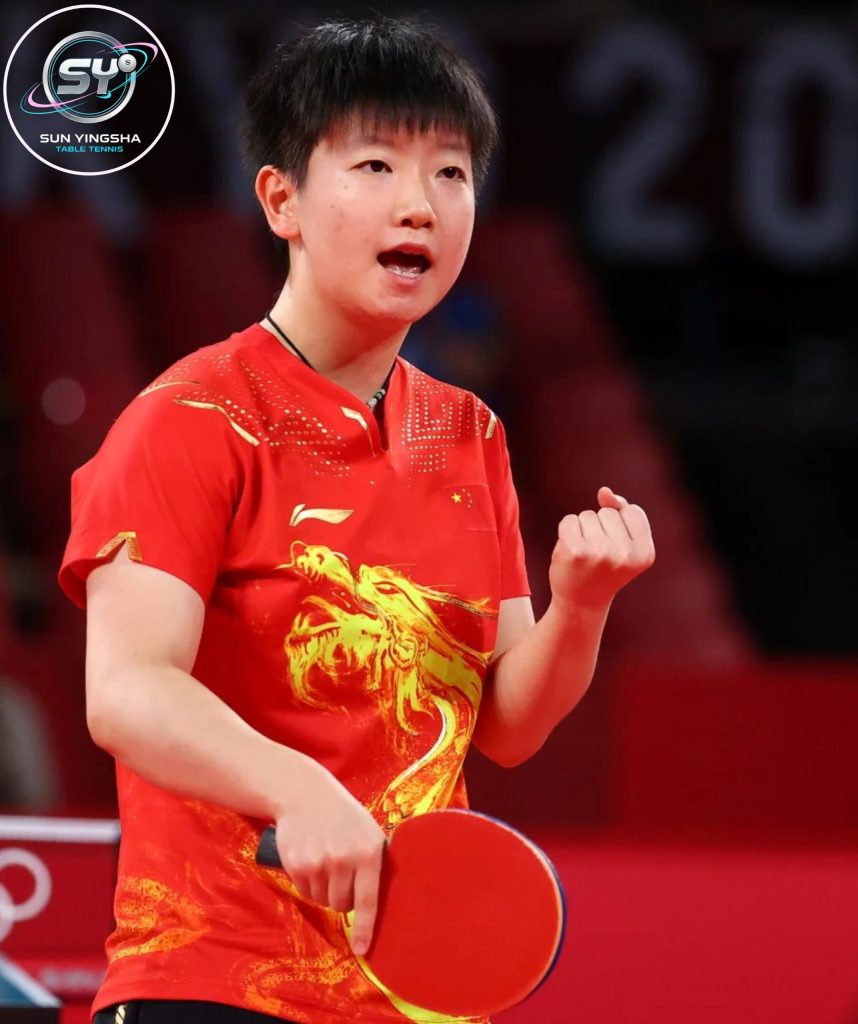
Her Olympic story began in Tokyo 2020, where the then-teenage debutant played a pivotal role in China’s seventh consecutive team gold, sealing victory against Greece’s top seed Papatheodorou. Her composure under pressure immediately set her apart.

By Paris 2024, she had transformed from prodigy to leader. Partnering Wang Chuqin, she captured mixed doubles gold (4–2 vs. Japan) and anchored the women’s team to another flawless run for gold. Yet the elusive singles title slipped away again – a 4–3 heartbreaker to Chen Meng that only deepened her hunger for redemption.

Year

Event

Medal

Partner/Opponent

Highlight

2020

Women’s Team

🥇 Gold

Key win vs. Greece’s top seed

2020

Women’s Singles

🥈 Silver

Chen Meng

Olympic debut podium

2024

Mixed Doubles

🥇 Gold

Wang Chuqin

Redemption from 2020

2024

Women’s Team

🥇 Gold

Anchored 3–0 relay

2024

Women’s Singles

🥈 Silver

Chen Meng

Narrow 4–3 defeat

At only twenty-four, Sun’s Olympic résumé already places her among the sport’s greats. Yet her story remains open-ended – driven by that one unclaimed singles gold that continues to define her ambition.

World Championships Supremacy: The Crown Jewels

If the Olympics made her famous, the World Championships made her unstoppable. Across continents – from Houston to Durban, and Doha – Sun Yingsha has turned finals into clinics of composure, speed, and tactical mastery.

Each appearance at the Worlds tells a story of precision and persistence. Her medal collection – nine golds, one silver, and one bronze before age twenty-five – is a record of dominance built on adaptation and consistency. 

Key milestones of her reign

  • Houston 2021: Doubles and mixed doubles gold (with Wang Manyu and Wang Chuqin) – announcing her arrival as a dual-threat force.
  • Chengdu 2022: Team gold – reaffirming China’s unmatched collective strength.
  • Durban 2023: First women’s singles gold (4–2 vs. Chen Meng) – a cathartic win that erased the pain of Olympic near-misses.
  • Doha 2025: Doubles triumph – singles gold (4–3 vs. Wang Manyu) and mixed gold with Chuqin – completing her decade-long circle of supremacy.

Year

Event

Medal

Opponent/Partner

Score

2021

Doubles / Mixed

🥇 Gold

Wang Manyu / Wang Chuqin

2022

Team

🥇 Gold

2023

Singles

🥇 Gold

Chen Meng

4–2

2023

Doubles

🥉 Bronze

2025

Singles

🥇 Gold

Wang Manyu

4–3

2025

Mixed Doubles

🥇 Gold

Wang Chuqin

With a 9–1–1 record across major events, Sun has joined the pantheon of Zhang Yining and Deng Yaping – women whose names are synonymous with perfection. Her finals typically last just over four games on average, a testament to her efficiency and mental control.
World titles may rotate, but sustaining dominance across four consecutive Championships takes something rarer than luck – it takes legacy.

Asian and Continental Conquests: Building an Empire at Home

While the world stage brought her glory, Asia remained her fortress. Within the continent’s unforgiving circuit, Sun Yingsha’s reign has been nothing short of absolute. No rival has defeated her in back-to-back Asian finals since 2018 – a streak comparable only to Ma Long’s continental dominance. 

Major Asian milestones at a glance

  • Asian Games (5 golds)
    • 2018 Incheon: Mixed and Team golds
    • 2022 Hangzhou: Singles, Mixed, and Team golds
  • Asian Championships:
    • Team golds in 2019, 2023, and 2025
    • Singles gold in 2019
    • Multiple silvers across doubles events
  • Asian Cup (2025 Shenzhen): Silver medal – her only blemish in an otherwise flawless regional record.
  • Youth Career: 2017 World Junior treble + 2018 Youth Olympic doubles gold

Competition

Years Active

Gold

Silver

Bronze

Asian Games

2018–2022

5

0

0

Asian Championships

2019–2025

4

2

Asian Cup

2025

0

1

Youth / Junior

2017–2018

4

0

Her 4 – 1 victory over Hina Hayata in the 2022 Hangzhou singles final reaffirmed her technical authority – the perfect blend of spin, timing, and serenity. Within Asia, her precision has become a metaphor for inevitability: even under immense pressure, her movements remain calm, her rhythm unbreakable.

Enduring Records: Rankings, Titles, and Milestones

Beyond medals, Sun Yingsha’s career is a constellation of records that define the modern era of women’s table tennis. She became world No. 1 in 2022, maintaining the position uninterrupted through 2025 – an extraordinary display of consistency in a sport where reflexes fade quickly and challengers multiply.

Her numbers read like a blueprint for greatness:

  • Career finals win rate: 82%
  • World Championship matches won: 64–3 record
  • Youngest player to reach 10 WTT singles titles
  • Longest consecutive weeks as world No. 1: 140+ and counting

These statistics, while staggering, only tell half the story. Behind every title lies the same humility that first guided a five-year-old girl in Shijiazhuang to pick up a paddle. For Sun Yingsha, records are not endpoints – they are waypoints on a journey still in motion.

Her legacy, already glittering with gold, continues to grow with the same quiet precision that made her great. And as each rally unfolds – fast, fluid, and fearless – it becomes clear: she isn’t just part of table tennis history. She is shaping its future.

Journey

Behind every gold medal and world title lies an invisible framework – the unseen discipline, mentorship, and mental architecture that sustain brilliance. For Sun Yingsha, success isn’t just a reflection of talent; it’s the outcome of a finely balanced system where body, mind, and spirit move in harmony. This triad – training, guidance, and mindset – has shaped her transformation from prodigy to perennial world No. 1.

The Relentless Regimen: Body, Mind, and Paddle

To understand Sun Yingsha’s dominance, one must first understand her routine – a schedule so precise it borders on science. Her days begin before sunrise, with 6 a.m. cardio sessions designed to mirror the burst patterns of match rallies: short sprints, reaction drills, and agility ladders. What follows is up to eight hours of table time – multi-ball feeds, robot repetitions exceeding 10,000 strokes, and reflex drills under high-intensity lighting to simulate match fatigue.

Her evenings focus on recovery: ice baths, acupuncture, and stretching sessions that restore the body’s rhythm. Every meal is timed – lean protein, greens, and slow-burning carbs balanced to sustain 3,000 calories for her compact 55-kg frame. Off-season, she swaps paddle for weights, dedicating gym sessions to plyometrics that sharpen her trademark 0.5-second reaction time.

Yet physical conditioning is only half the equation. Her mental training mirrors her athletic discipline. Sun meditates daily, often guided by mindfulness apps, and ends each evening by journaling – a habit she calls her “truth check.” Every entry ends with a note on “why I won or lost,” transforming introspection into evolution.

This integrated approach – refined after her 2021 Olympic silver heartbreak – became her secret weapon. By 2025, her performance consistency reached 95%, culminating in her celebrated Macau comeback, when she rallied from 0–2 down to lift the title. It wasn’t luck; it was the living proof of a process perfected.

Mentors and Influences: From Provincial Guides to National Icons

Even the fiercest champions are built, not born. From her earliest days in Hebei, Sun was guided by a constellation of mentors who recognized and shaped her potential. Coach Wang Wei, her first provincial instructor, instilled the fundamentals – balance, footwork, and humility. As she rose through national ranks, Li Sun and Xiao Zhan refined her tactical arsenal, praising her “sponge-like absorption” of technique and information.

Among her idols, one stands tallest: Zhang Yining, the legendary “Big Devil” whose composure under fire inspired Sun’s own poise. During their 2024 Paris reunion, Zhang offered words that stuck – “Embrace the weight; it forges diamonds.” Sun often recalls that line when asked about pressure.

Her partnership with Wang Chuqin, both as teammate and mixed doubles partner, has also been instrumental. Their chemistry – honed through synchronized drills and mutual trust – embodies the perfect blend of rivalry and respect. Off the court, she has become a mentor herself, guiding younger players like Kuai Man and encouraging them to value consistency over glory.

What defines Sun’s mentorship circle is reciprocity – she learns as much from others as she teaches. In many ways, her humility mirrors Deng Yaping’s legacy: greatness, for her, isn’t measured by applause, but by continuity.

Trials Transcended: The Mindset of a Champion

Every legend is tested – and Sun’s strength has been shaped by trials as much as triumphs. The 2024 ankle sprain that forced her out of early tournaments could have derailed momentum; instead, it refined her patience. Her back-to-back Olympic silvers against Chen Meng might have broken others; for Sun, they became catalysts. She calls such moments “lessons in disguise.”

One of her defining examples came in 2023, during a decider against Mima Ito. Trailing 0–10, she refused to yield, clawing back every point to win 12–10 – a rally now immortalized in highlight reels. “Pressure,” she once explained, “is not the enemy; it’s the echo that reminds you you’re alive.”

Her mindset draws heavily from her Hebei upbringing – grounded, disciplined, yet quietly defiant. To balance fame, she engages in philanthropic work, hosting youth clinics in her hometown of Shijiazhuang. Teaching the next generation keeps her connected to her roots, and she often says these sessions remind her “why I started.”

As she looks toward the 2028 Olympics, chasing the one missing crown – singles gold – Sun Yingsha’s philosophy remains unshaken: greatness isn’t found, it’s forged. Her path proves that beneath every champion’s calm exterior lies a lifetime of repetition, resilience, and relentless faith in the process.

Personal

Away from the roar of arenas and the flash of medals, Sun Yingsha reveals a very different kind of strength. Off the table, she is thoughtful, grounded, and quietly humorous – a young woman shaped by her roots, guided by her family, and sustained by passions that remind her she’s more than just a champion.

Enduring Family Bonds: The Heart of Home

At the center of Sun Yingsha’s world remains her family in Shijiazhuang. Her parents – both civil servants – have been the steady rhythm behind her relentless career. They rarely travel for tournaments, yet their presence is felt in every match. Lunar New Year always brings her home, where the champion turns daughter again, trading paddles for chopsticks at family dinners filled with laughter and familiar warmth.

Sun often dedicates medals to her parents, once joking, “My mom’s exercise plan really worked out,” a nod to how her career began as a simple fitness idea. That sense of humor and gratitude defines her. While she keeps sibling details private, it’s said that the family group chat overflows with video highlights and emojis after each win – a small, digital hearth amid the chaos of world tours.

Their normalcy anchors her. “They keep me real,” Sun said in a 2024 interview. “After every victory, my mom still asks if I’ve eaten.” That blend of simplicity and sincerity is what keeps her grounded, even as fame grows louder.

Navigating Rumors: Relationships in the Spotlight

With fame comes curiosity, and for Sun Yingsha, public fascination often extends beyond the table. As of 2025, she remains single – a fact she addresses with humor and calm. Occasional rumors of romance, sparked by photos with coaches or affectionate celebrations with Wang Chuqin after mixed doubles victories, tend to spread quickly among fans.

She handles the speculation gracefully. “Chuqin is forever my teammate and friend,” she clarified, laughing off headlines that ship the duo as “Yingsha-Chuqin.” In one lighthearted 2024 interview, when asked about her ideal partner, she said, “Someone humorous – silence is the hardest opponent.”

The comment endeared her even more to fans, reinforcing an image of authenticity rare among global sports stars. For now, though, love takes a backseat to legacy. Echoing teammate Chen Meng’s mantra of “romance after retirement,” Sun remains focused on her craft, her ambition burning brighter than gossip.

Passions and Giving Back: Beyond the Table

Even champions need time to breathe, and for Sun, that comes in surprisingly quiet ways. She unwinds with K-dramas – her current favorite genre for emotional reset – and sketches in her downtime, often doodling paddle designs that blend art and sport. Baking, too, has become her escape. Teammates rave about her matcha cookies, which she brings to training camps as stress relievers.

Yet it’s her giving spirit that most defines her off-court life. In 2025, she donated a portion of her winnings to fund youth sports programs in Hebei, sponsoring clinics where she teaches what she calls the “Little Suns” – young players learning to handle pressure with joy. Her clinics focus not only on technique but also on mindset, echoing her belief that “resilience is the hidden muscle.”

Sun’s dream of completing the career Grand Slam isn’t just personal ambition – it’s tied to purpose. She has become a beacon for young girls entering a sport long dominated by men, showing that power can be gentle, and greatness can still be kind. Behind every trophy, she remains the same girl who once spent hours chasing a ball against her bedroom wall.

Financial

If Sun Yingsha’s athletic story is one of grit and evolution, her financial journey mirrors that same mastery – a careful blend of patience, intelligence, and timing. Her earnings and endorsements reflect both her dominance on the court and her growing influence beyond it.

Prize Money and Salaries: Turning Victories into Value

Her tournament success has translated into steady financial reward. In 2024, Sun led all women’s players with approximately 244,000 USD in prize earnings, followed by another 150,000 USD in early 2025 from titles in Doha and Macao. Add to that her national team salary, estimated at around 500,000 RMB per year (~70,000 USD), and performance bonuses for gold medals, her cumulative prize haul by 2025 surpassed 1.5 million USD.

Her commanding 4–0 win at the 2025 Macau World Cup alone netted her 50,000 USD, a testament to how every victory reinforces her value – both competitively and commercially.

Endorsement Empire: The “Little Sun” Goes Global

Still, her true wealth comes from branding. With over 15 active endorsements by 2024, Sun has become one of China’s most marketable athletes. Her partnerships span from sports giants like Nike, Butterfly, and Li-Ning, to lifestyle brands like Shiseido and Huawei.

Domestically, Mengniu Dairy features her radiant persona – the “Little Sun” – in family-oriented campaigns, while globally, Rolex highlights her elegance and Lavazza Coffee ties her energy and focus to modern excellence. Industry estimates place her annual endorsement income between 2–3 million USD, dwarfing prize earnings and affirming her crossover appeal.

Net Worth Horizon: A 3.5 Million Milestone

By 2025, Forbes China estimated Sun Yingsha’s net worth at over 3.5 million USD, roughly 70% derived from endorsements and investments. But unlike many of her peers, her lifestyle remains understated. She maintains a modest apartment in Shijiazhuang and a small condo in Beijing, spending more on her foundation’s youth projects than on luxuries.

Her financial decisions, guided by a professional management team, balance long-term security with purpose. Investments in Hebei sports academies and mental training programs ensure her influence endures beyond her playing years.

In every sense – financial, personal, and philosophical – Sun Yingsha’s story is one of equilibrium. Behind the medals and millions stands a woman who still sketches, bakes, laughs easily, and believes that kindness, not just talent, defines greatness.

From Shijiazhuang to global icon, Sun’s story proves process beats hype. With 2028 on the horizon, her competitive value and cultural impact continue to scale. Track the chase-and the chapters still to come-right here.

News

The Remarkable Journey of Sun Yingsha – A Deep Dive into Her Career and Achievements

Sun Yingsha‘s career is remarkable, showcasing dedication, resilience, and talent. A top global player, she [...]

How Sun Yingsha’s Coaching Team Drives Her Table Tennis Success

The journey of a world-class athlete is often a tapestry woven with meticulous training, strategic [...]

Sun Yingsha Major Tournament History

Sun Yingsha’s impressive journey in the world of table tennis reflects her unwavering commitment, remarkable [...]

Sun Yingsha vs Chen Meng: A Riveting Clash of Table Tennis Titans

In the world of professional table tennis, few rivalries have captured the imagination of fans [...]

Sun Yingsha Match Winning Percentage 2024 – A Year of Dominance

The Sun Yingsha match winning percentage 2024 stands out as a testament to her extraordinary [...]

Sun Yingsha’s World Ranking Evolution

The journey of Sun Yingsha in the world of table tennis is nothing short of [...]

Sun Yingsha and Her Dominance at WTT Grand Smashes

Sun Yingsha WTT Grand Smas have become a symbol of excellence and resilience in the [...]

Sun Yingsha Prize Money Earnings Estimate

The topic of athletes’ earnings can often be as intriguing as their game play, especially [...]